Helping Remote Workers Recognize Burnout Before It Hits
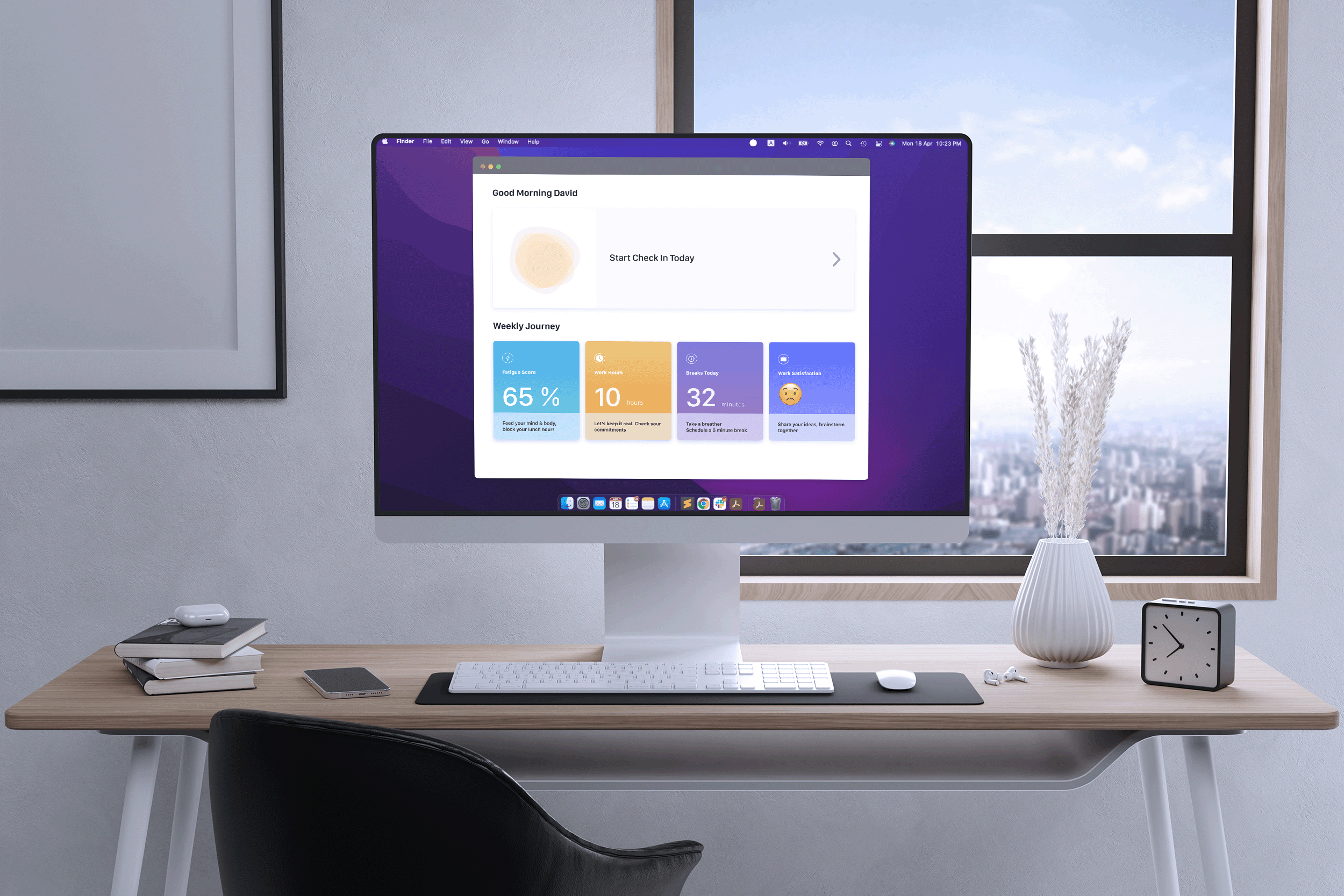
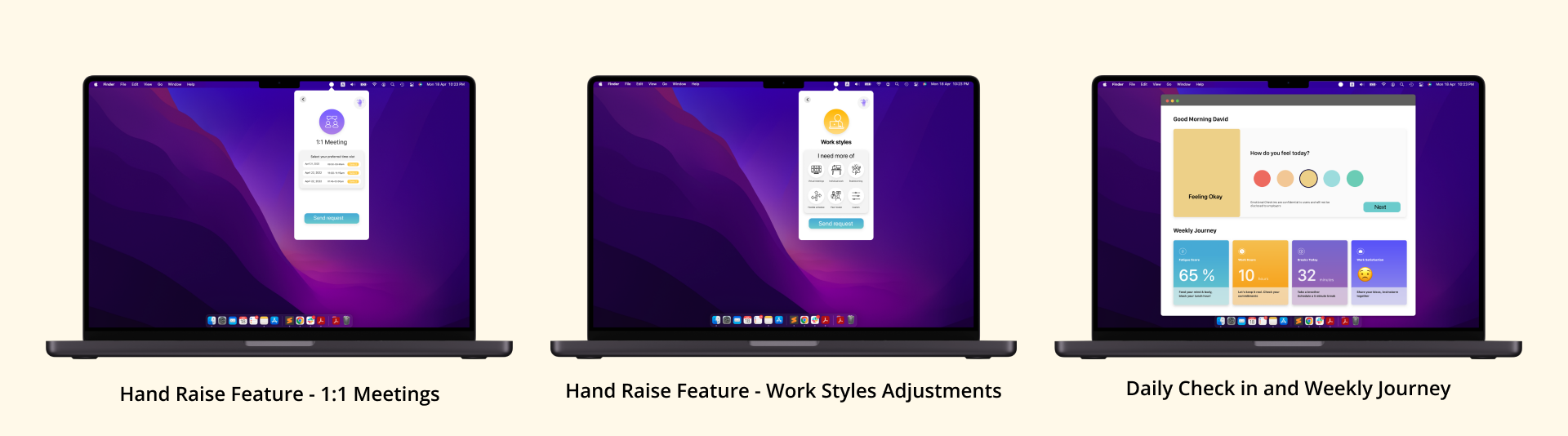
While observing the shift between in-person and remote work environments, I noticed that many employees struggled to separate their work and personal lives while working from home. As a result, their mental health often suffered. Recognizing this challenge, I realized the need for a tool to promote mindfulness. NOON was designed to address this gap. It focuses on improving work-life balance by helping tech employees identify the emotional states that impact their work styles. We created features that guide employees in taking action when burnout is likely to occur. Additionally, we developed a system for employees and managers to communicate work needs through a desktop application, utilizing hand-raise and task-adjustment features.
Objectives
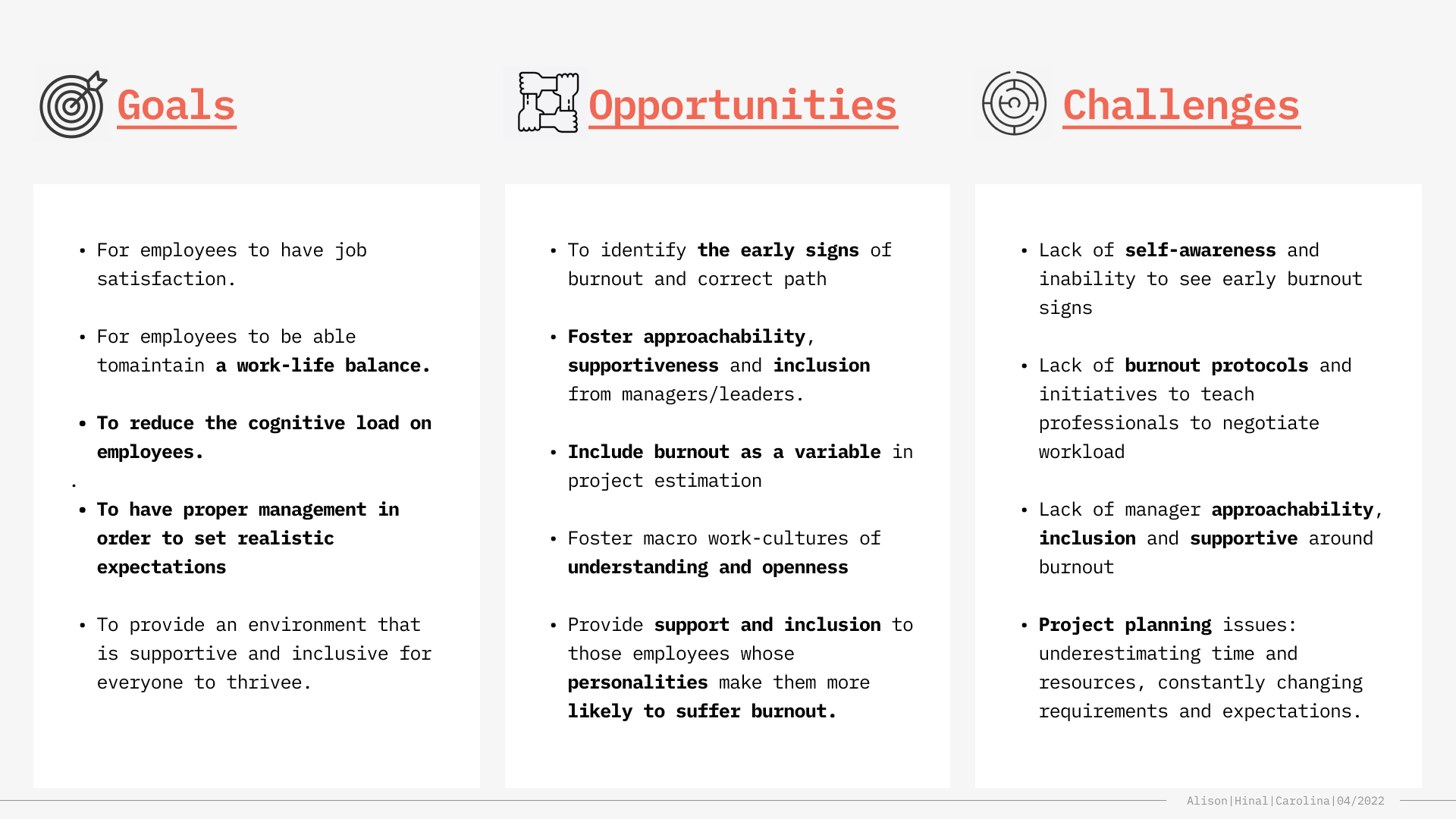
Identify Causes — Identify the root cause of burnout risks and burnout prevention methods.
Energy Management — Create a system for tech employees to manage burnout while managing energy levels.
Improve Communication — Improve communication needs between employees and managers.
Public Response
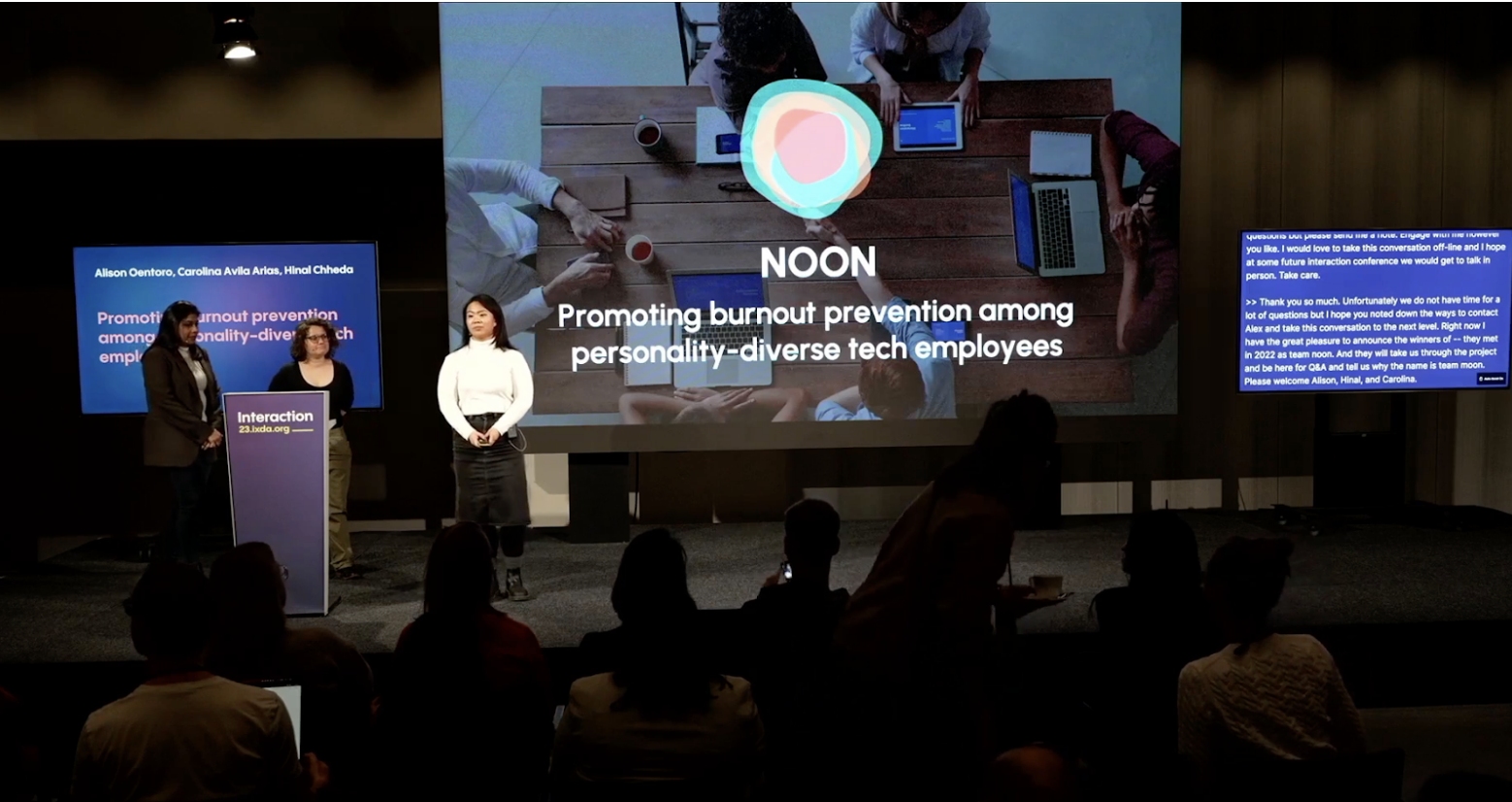
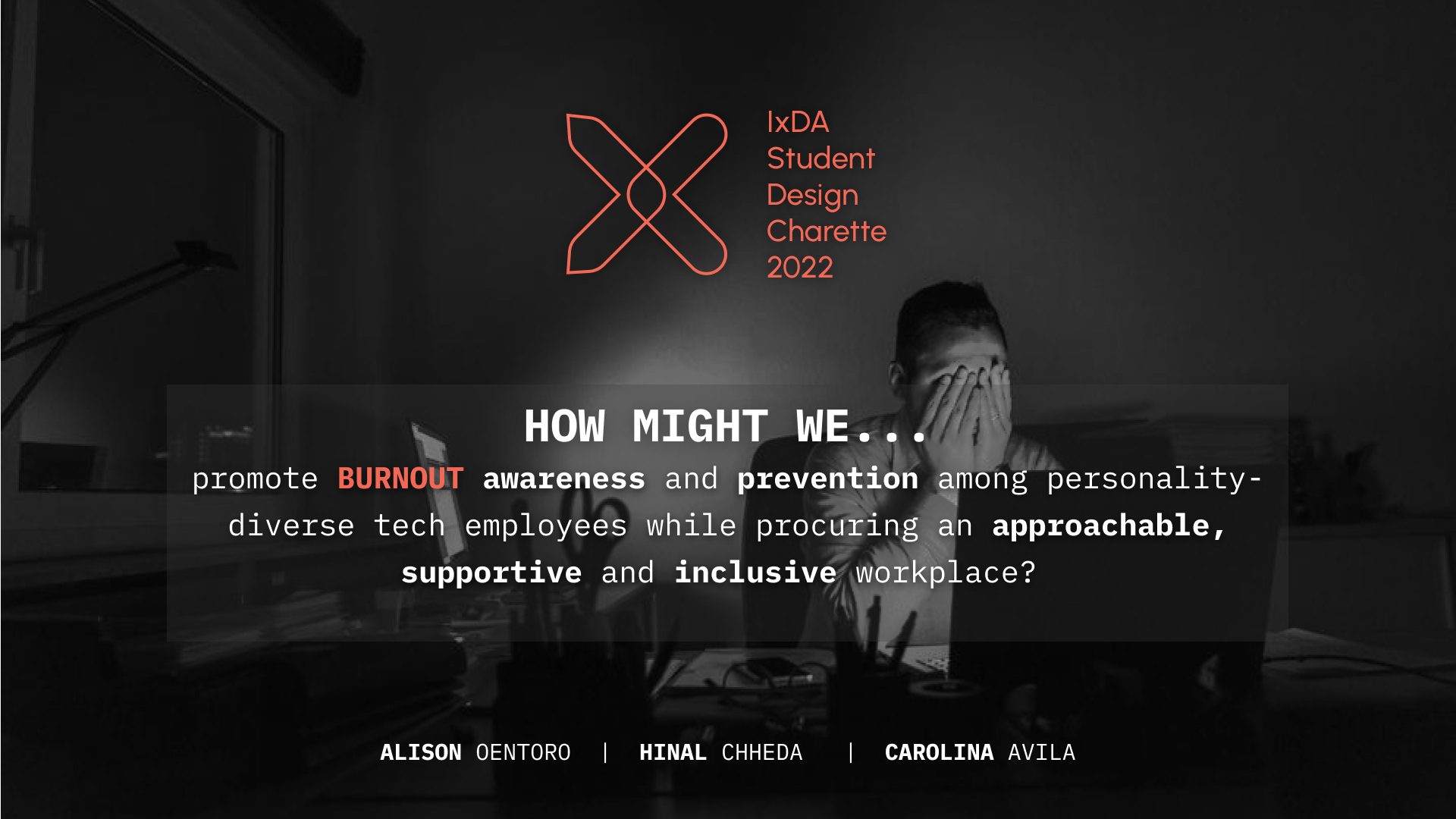
As the winning team of IXDA's Student Design Charette, we received feedback from fellow designers, researchers, and engineers regarding our design software, NOON. Our win during the competition allowed us to present our work at Interaction 23, showcasing NOON's potential in improving work environments between managers and employees by addressing burnout.
Designing for Two Users with One Tool
As we worked on NOON, we faced a few key challenges that really shaped the direction of our design. From truly understanding what employees needed to finding ways to simplify how we displayed emotional data, these obstacles pushed us to think creatively and refine our approach.
Presentation & Process Slides
Below are slides showing the step-by-step design thinking, process, and validation details:
Identifying and Addressing User Needs
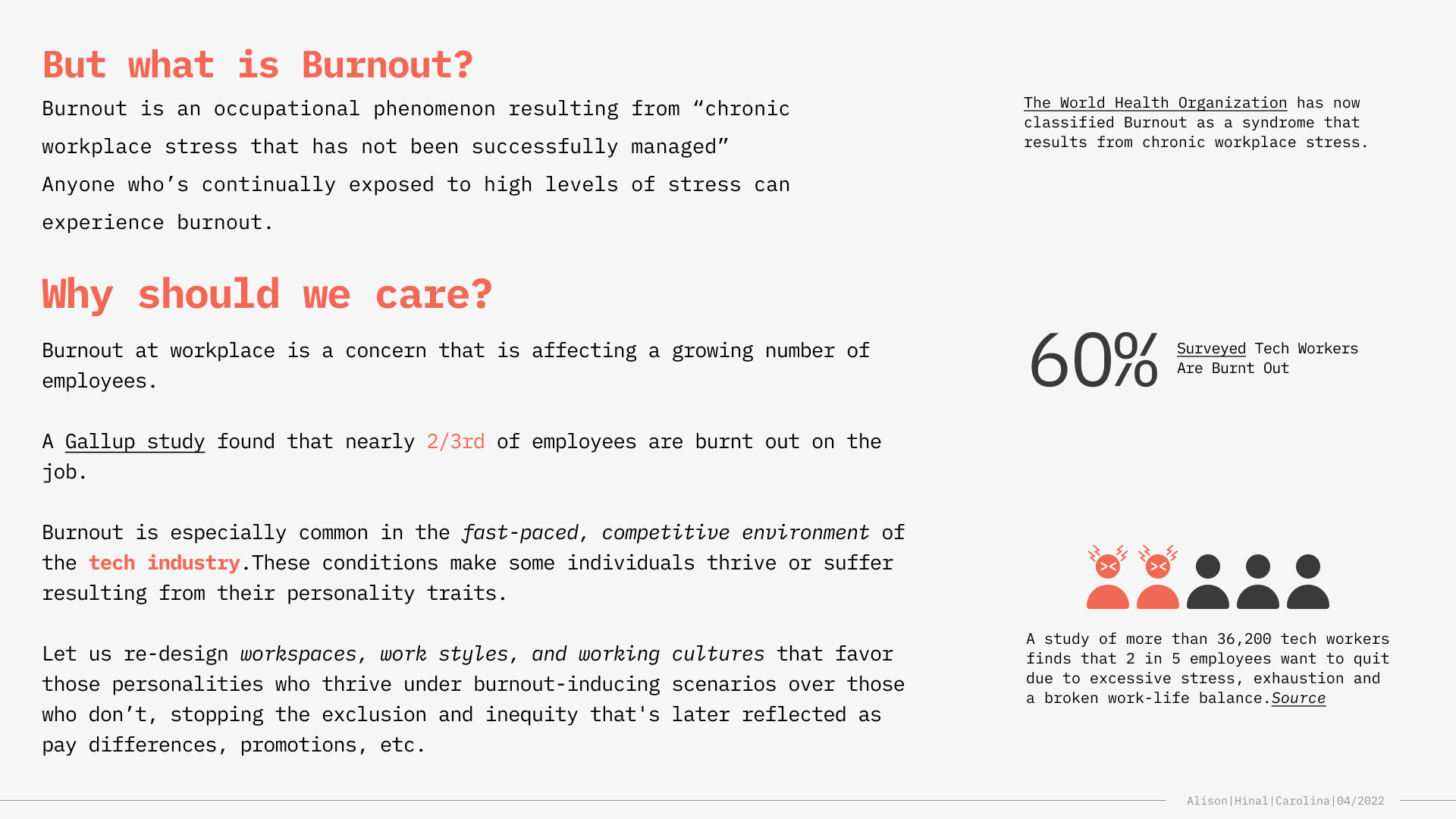
During our initial user research, we realized that tech employees struggled to articulate their
feelings of burnout and differentiate between normal work stress and actual burnout. This made
it difficult to create features that would resonate with users.
Solution: We conducted deeper qualitative interviews to gather insights into their
emotional triggers and work habits. We then created a mood-tracking feature that allowed users
to reflect on their emotional states throughout the day, which helped bridge this gap.
Simplifying Complex Information
Another challenge was translating complex emotional data into simple, actionable items. Many
employees found it overwhelming to address their emotional health alongside their work tasks.
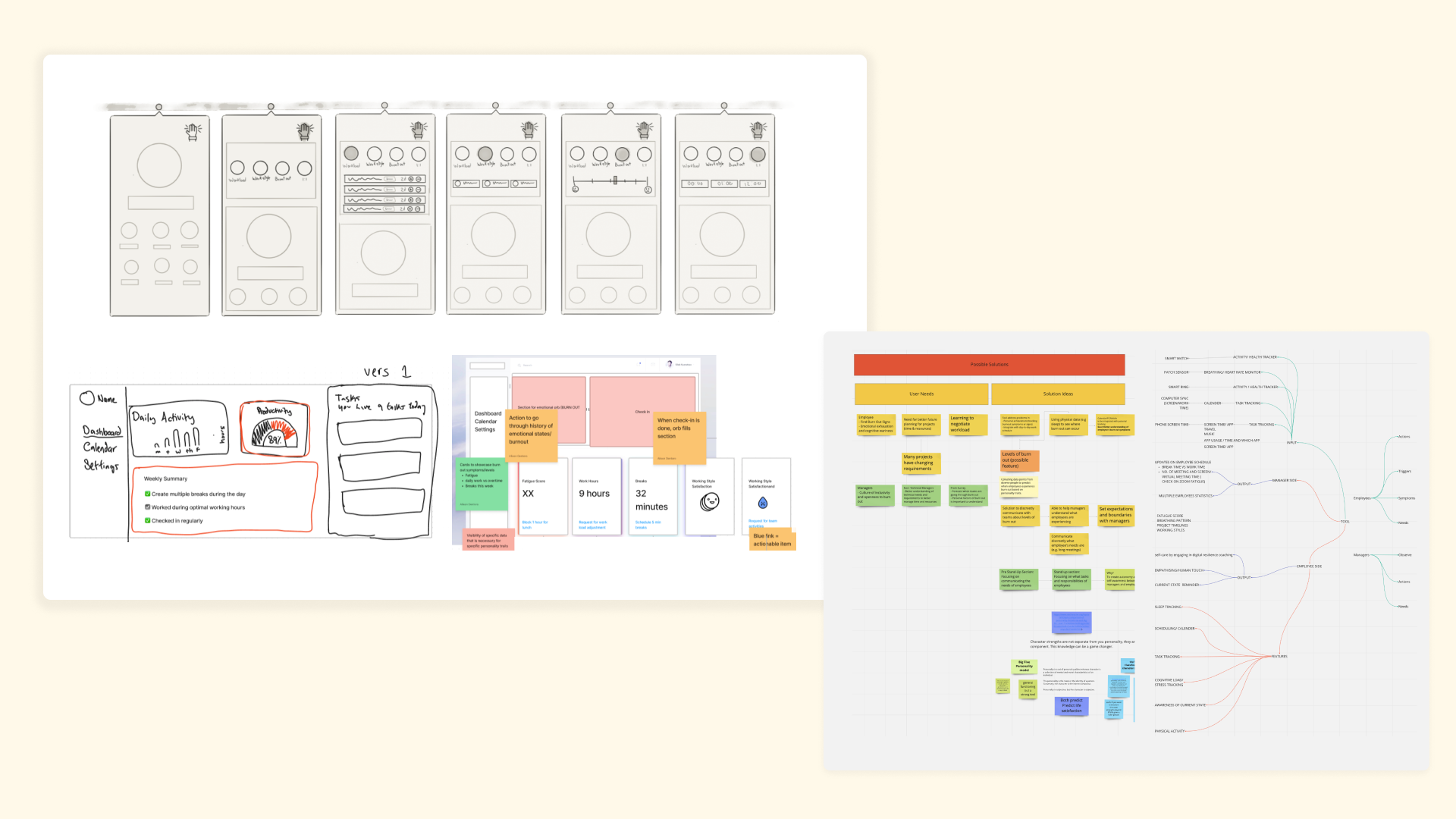
Solution: We focused on designing an intuitive dashboard that visually represented
emotional states with simple, clear cues. We also used color coding and progress tracking to
guide users through manageable steps without overwhelming them.
Facilitating Manager-Employee Communication
A significant challenge was balancing the communication between employees and managers about
workload adjustments without making the employees feel exposed or vulnerable.
Solution: We developed a "hand raise" feature, allowing employees to discreetly notify
their managers when they needed adjustments to their tasks. This feature empowered users to
maintain control over their workload while encouraging open communication.
Understanding Burnout from Both Sides of the Desk
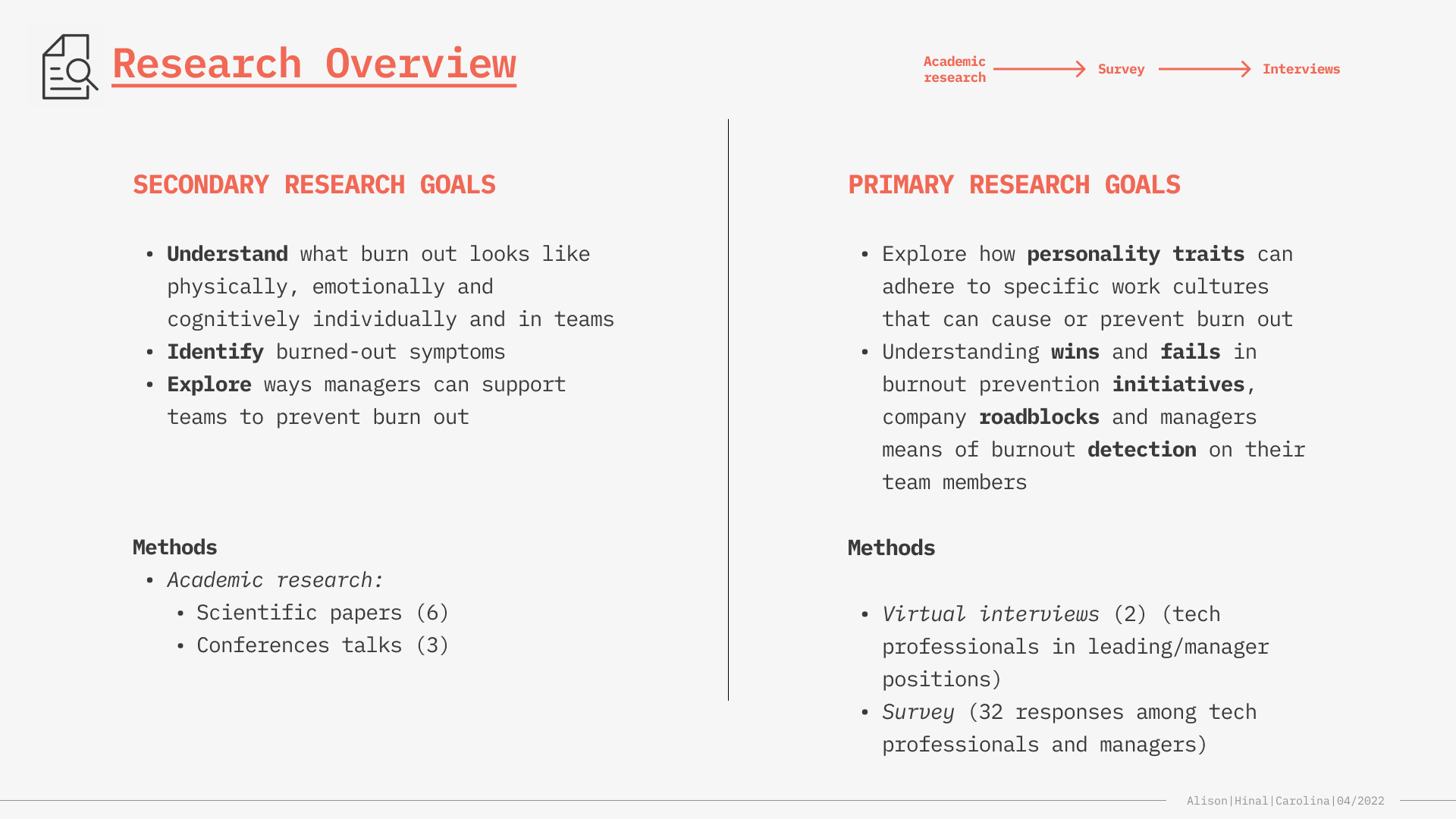
To gain a comprehensive understanding of user needs, we focused on three key areas:
Identifying user pain points (for employees and managers).
Conceptualizing types of data required for identifying burnout.
Conducting usability testing to understand the new concept.
Survey & Interview Findings
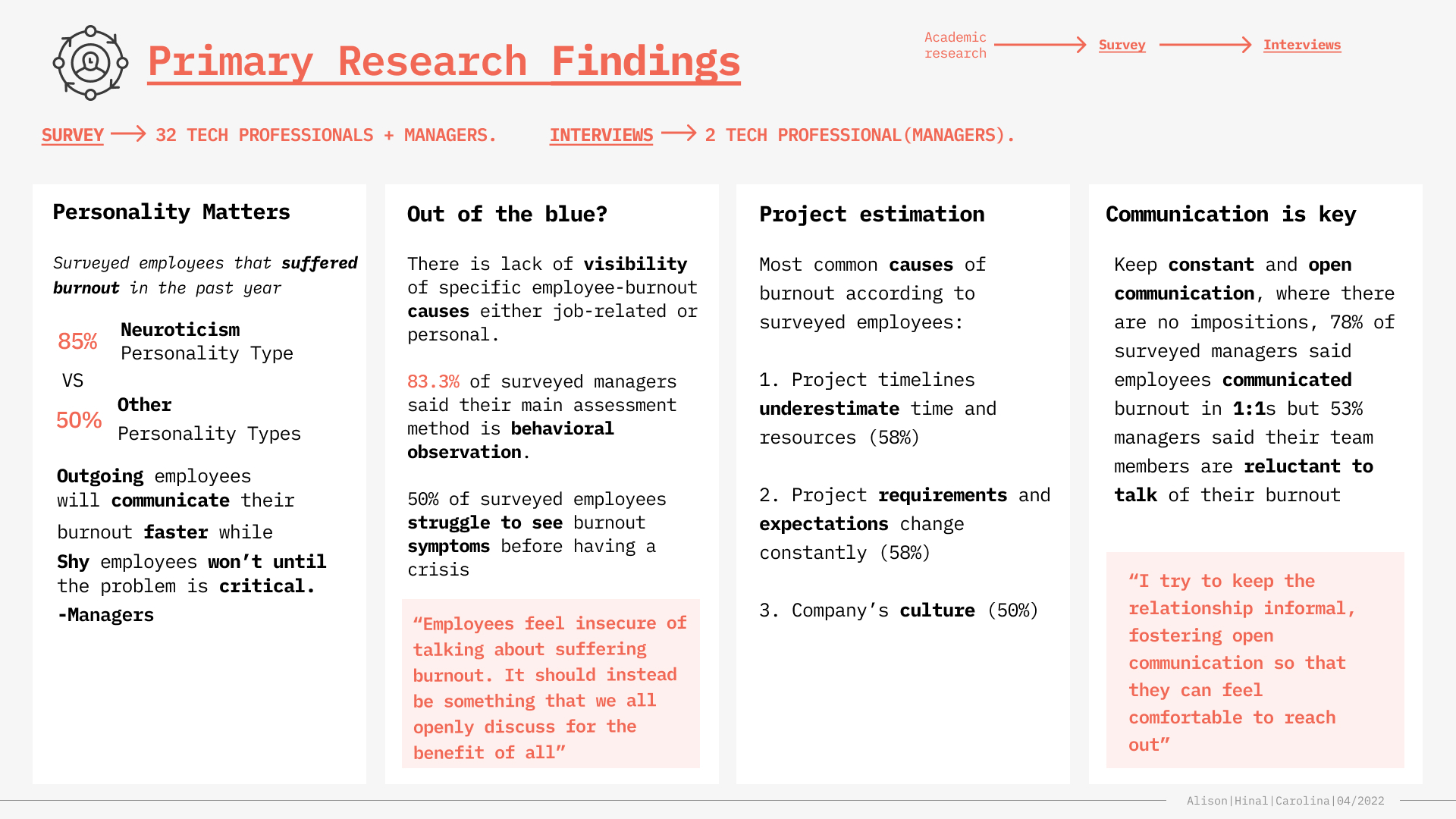
58% of users mentioned that underestimated project timelines and resources are the most common cause of burnout.
78% of managers reported that employees discussed their burnout during one-on-ones, yet 53% of managers noted that their team members were reluctant to communicate about it.
65% of surveyed employees face challenges regarding the company's consideration towards burnout symptoms and topics.
Design Solutions
Insight 1
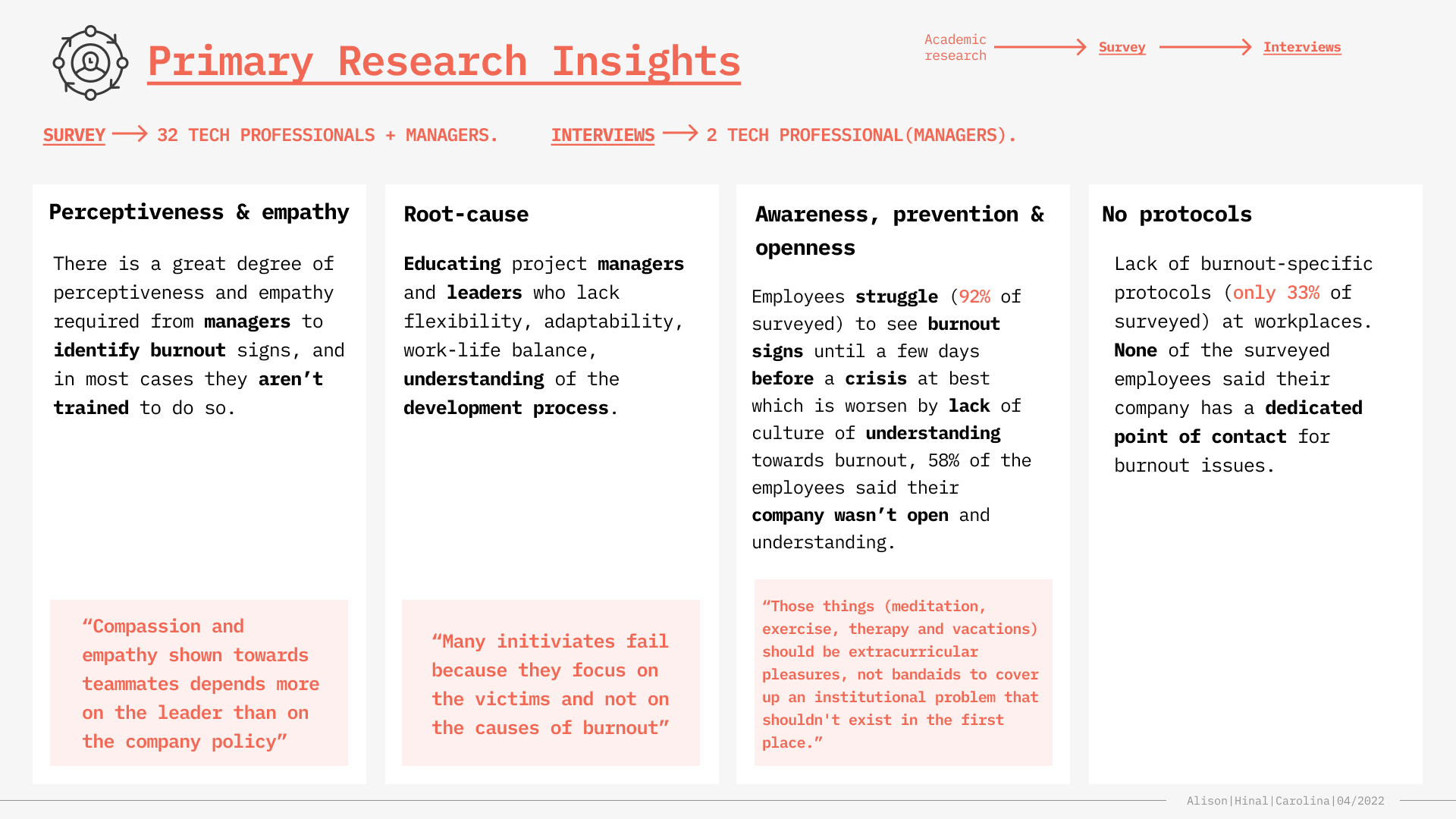
Employees struggle to recognize burnout signs early, with 92% of those surveyed only noticing symptoms a few days before reaching a crisis point. This issue is exacerbated by a lack of understanding towards burnout in company culture, with 58% of employees reporting that their company wasn't open or supportive about the topic.
Recommendation 1
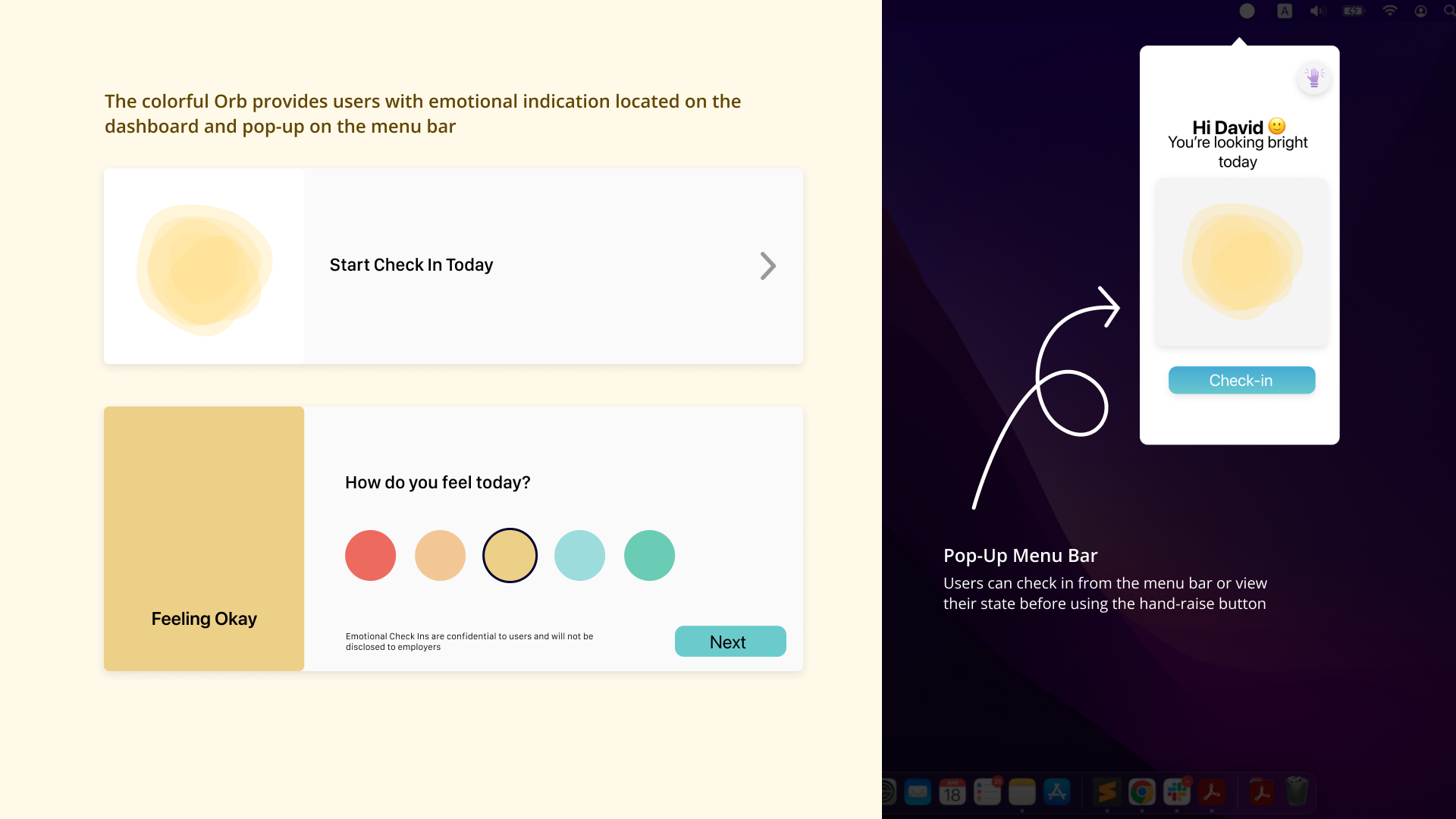
Empower users to have clarity about their daily emotions before work and take charge of their work day by checking in.
Inspired by mindfulness tools, we discovered that many users lack awareness of their mental states before, during, and after work. By prompting users to note their emotions daily, NOON can analyze these emotional patterns and identify potential burnout trends before they escalate. As we track the user's emotional states day to day, we provide users with actionable tasks that encourage them to be aware of their emotional states and energy levels.
Insight 2
Lack of burnout protocols and initiatives to teach users to negotiate workload.
Many initiatives fail because they focus on the victims and not on the causes of burnout.
Project estimations, resources, and needs often change for various reasons. However, without the ability to adjust workload or request work-related accommodations (such as meetings, time adjustments, and resources), employees are more likely to experience burnout when negotiating these changes in work requirements.
Recommendation 2
Provide users with the ability to flag tasks and request work-related accommodations during projects.
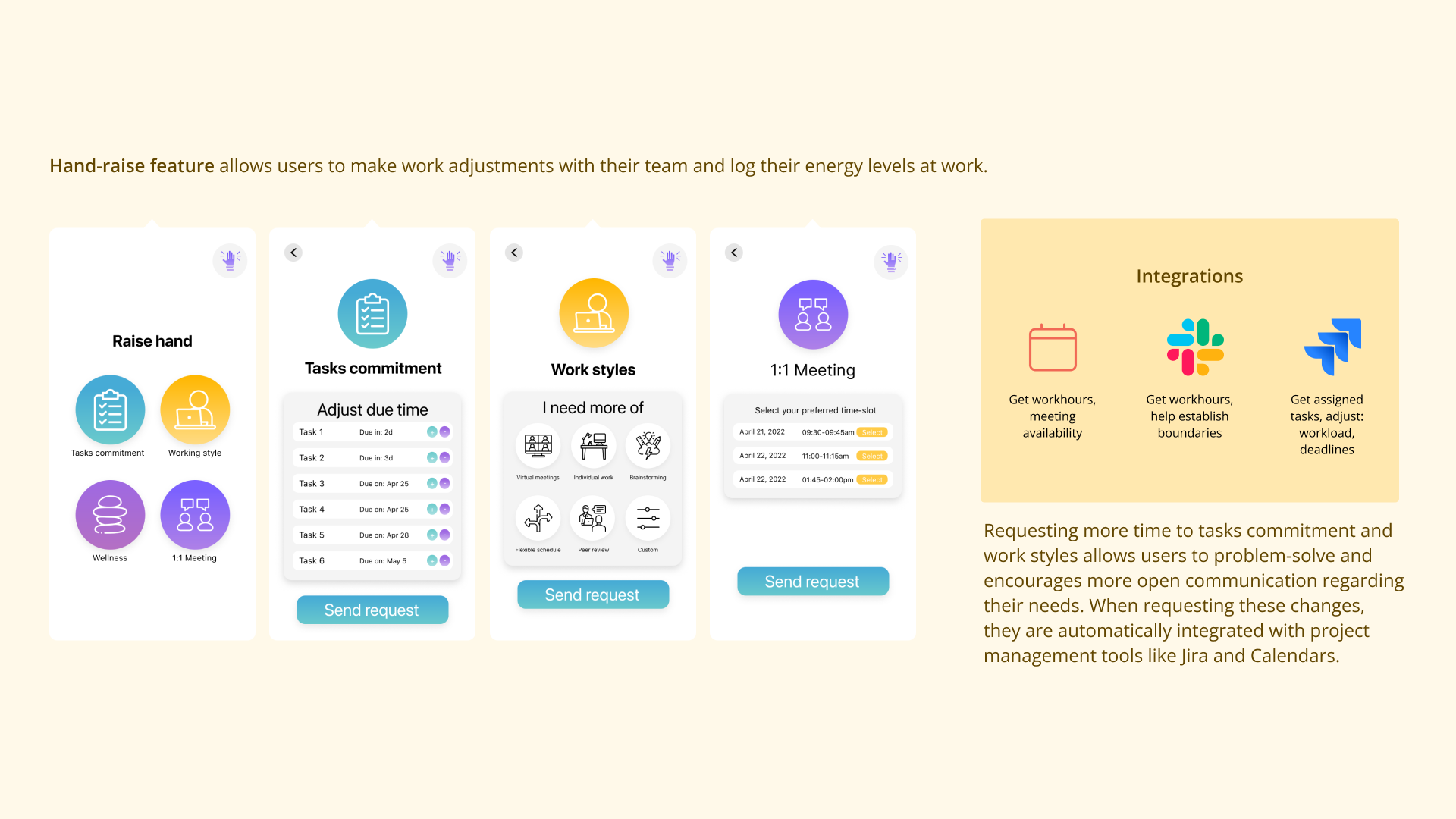
Through the Hand Raise feature, users can flag tasks that require attention and request work-related accommodations from their managers. This allows managers to see how they can collaborate with their employees to ensure effective project management.
Insight 3
An increase in work hours and fatigue, combined with a lack of work satisfaction and breaks, can worsen a user's burnout state.
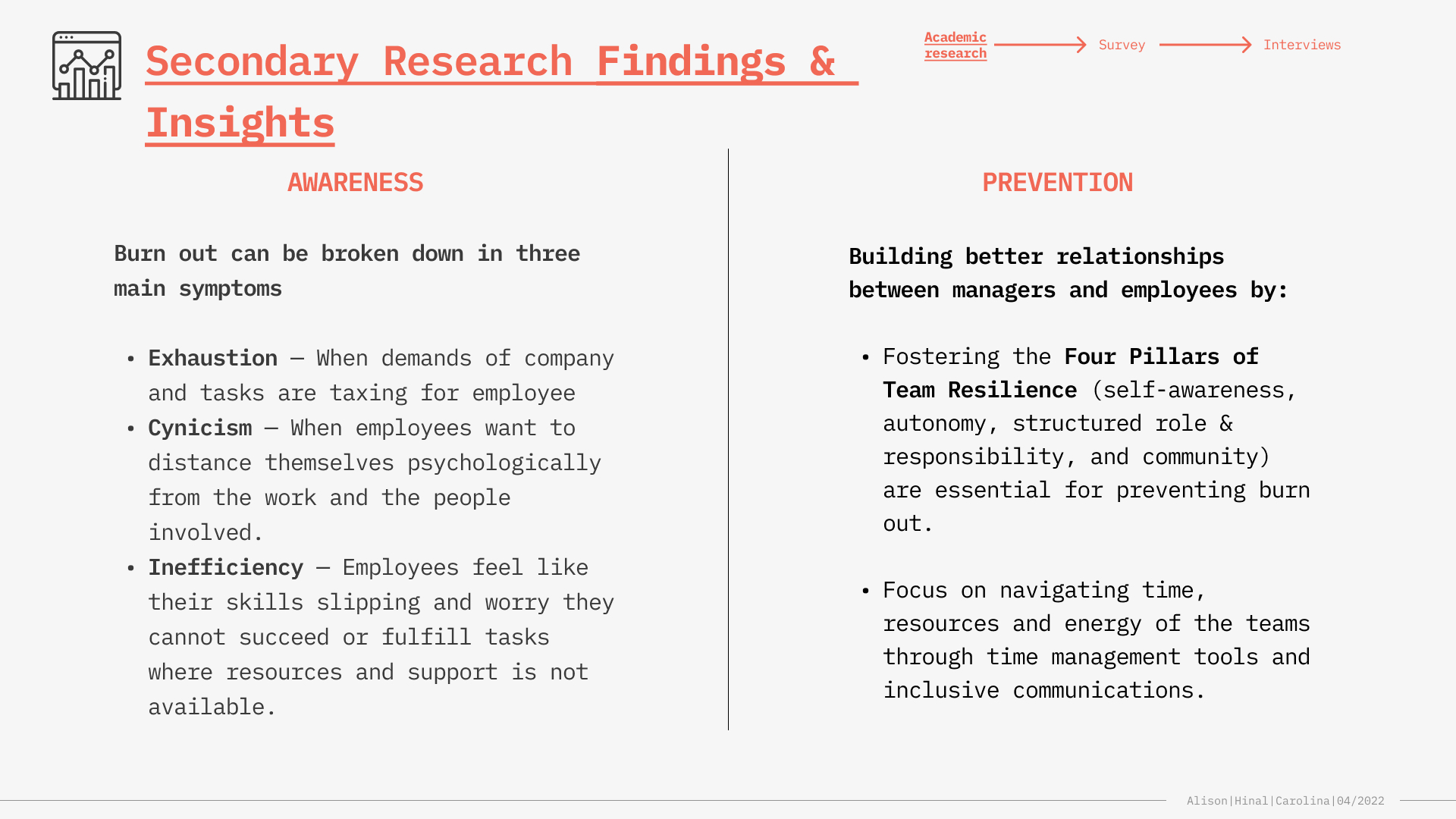
Through secondary research of academic articles on high-pressure environments similar to tech workplaces, we found that employees who don't take preventative measures against burnout often worsen their condition. Conversely, employees who actively improve their work-life balance are less likely to experience burnout.
Recommendation 3
Use existing data and tools to help users take data-driven action.
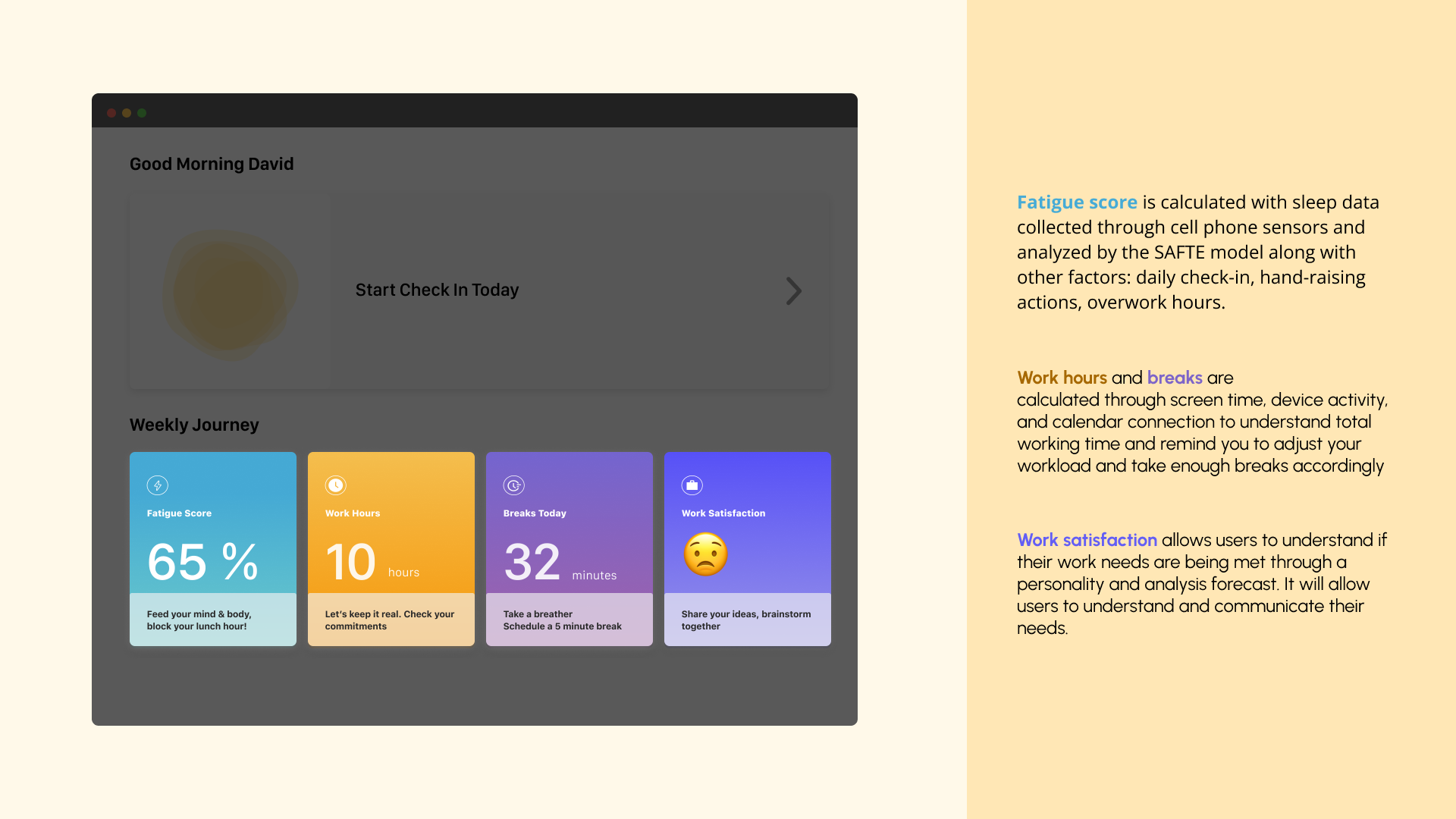
By displaying fatigue scores, work hours, break times, and work satisfaction in the Weekly Journey, NOON empowers employees to take preventative measures against burnout symptoms. Additionally, the Orb changes colors based on the data and tools users employ to manage their burnout and energy levels.
Insight 4
While 78% of surveyed managers reported that employees discussed burnout during one-on-one meetings, 53% of these managers noted that their team members are hesitant to talk about their burnout.
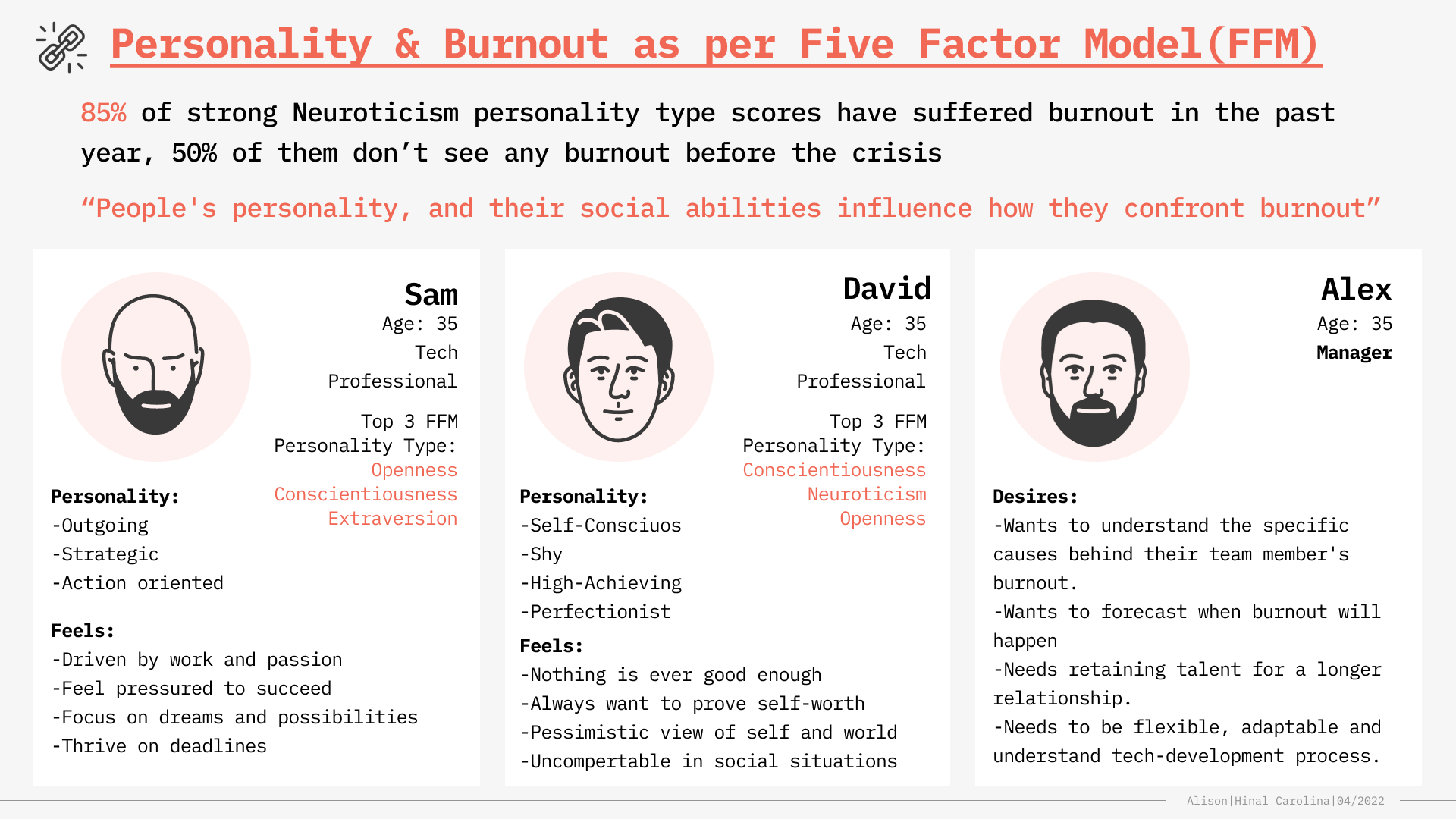
Managers need a high level of perceptiveness and empathy to identify signs of burnout, but many lack the necessary training. Providing education for project managers and leaders can address gaps in flexibility, adaptability, work-life balance, and understanding of the development process.
I try to keep the relationship informal, fostering open communication so that they can feel comfortable to reach out
Compassion and empathy shown towards teammates depends more on the leader than on the company policy
Employees feel insecure of talking about suffering burnout. It should instead be something that we all openly discuss for the benefit of all
Recommendation 4
Encourage open communication between managers and employees by giving staff the opportunity to express themselves and promoting a positive work culture.
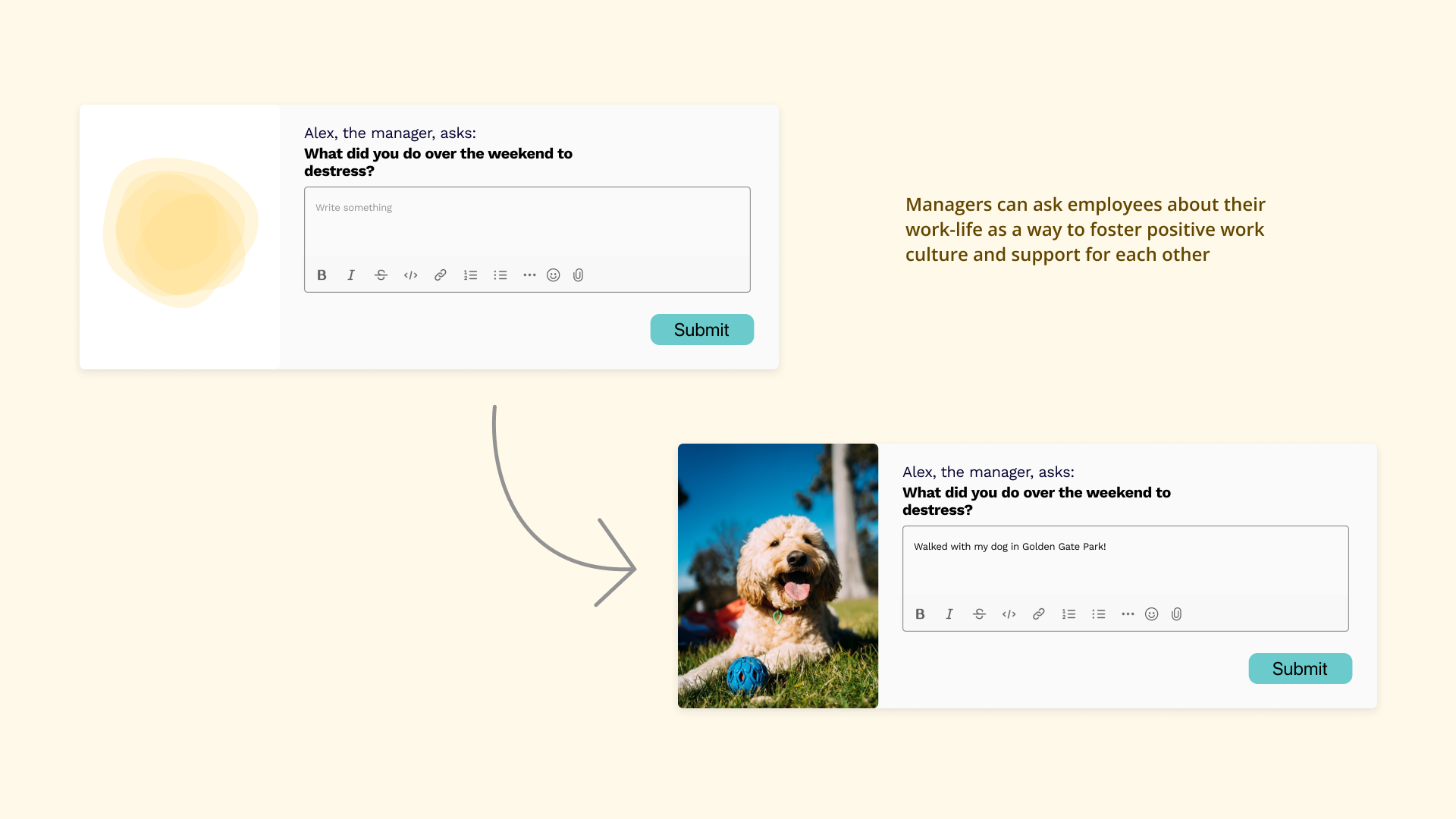
There is a lack of trust between employees and managers, leading to discomfort in communicating about work and personal matters. During the check-in phase, managers can foster better communication by engaging in informal conversations outside of work to gain a deeper understanding of their employees' daily lives. The final check-in point allows employees to casually discuss their work-life balance, contributing to a positive work culture within the company.
Users Said NOON Made Burnout Feel Manageable
During user testing, we saw a noticeable boost in satisfaction, with many users saying NOON helped them better understand their emotions and manage burnout more effectively.
Positive Feedback from User Testing
- Once users know what they want to do, it is easy for them to navigate the product.
- The features address issues with burnout through the Hand Raise and check-in phase.
- Communication with managers is dynamic and seems valuable to users.
- Colors for emotions communicate the weekly journey of the users, therefore articulating their emotions efficiently.
Just by understanding the main topic, I was able to seamlessly do all the actions. I think it communicates well.
Areas for Improvement
Hand raise clarity
There are moments where users don't understand the hand raise feature to communicate needs.
Visual cues
Lack of visual cues to indicate the button's states.
Discoverability
Requires some exploration to understand how to use the hand raise feature.
Raise Hand functionality was confusing as I could not connect "Raise Hand" with the Hand icon.
From Charette to Conference Stage
NOON was showcased at IXDA's Interaction 23, where it received positive feedback from an audience of over 200 design professionals. Attendees praised NOON for its innovative approach to improving employee well-being in the tech industry.

Value of Usability Testing
Through testing our design concept, we understand the benefits and limitations of designing a work tool that will benefit two different users. If given more time, we would explore how this product could be used in a real-world scenario.
Assumptions made vs actual insights from users
Our primary and secondary research revealed insights that differed from our initial assumptions. This experience highlighted the crucial role of thorough research in accurately addressing user needs.